
Knoxville Basement Waterproofing
Water on the floor after every storm? We find where it gets in and stop it, so the basement stays dry next time it pours.
- Leak traced to its source
- Drains and sump pumps
- Finished basements handled
Basement Waterproofing in Knoxville, TN
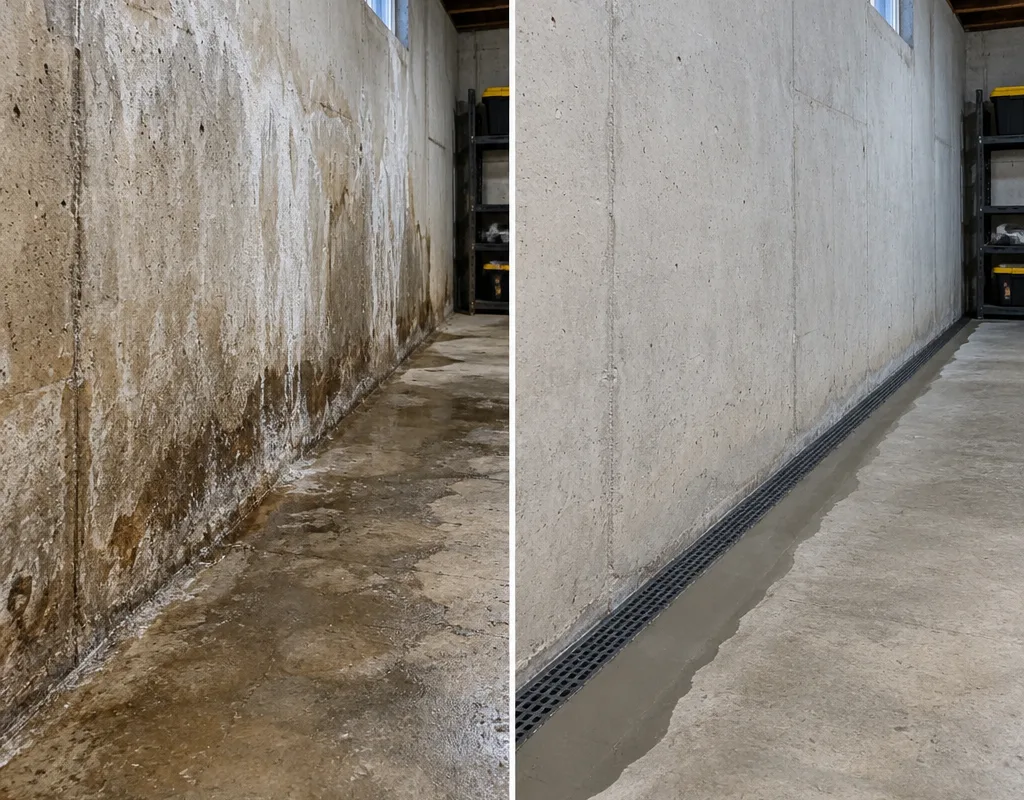
A wet basement almost always leaks in one of a few places: the joint where the wall meets the floor, a crack in a poured wall, the hollow cores of a block wall, or around pipes that pass through. Each one has a different fix, so the first job is finding which one you have.
Most calls we get start with water on the floor after a big rain, and that's where basement waterproofing begins. Knoxville, TN basements built with concrete block tend to let water through the block itself, while poured walls usually leak at cracks and tie holes.
We check the inside and the outside: where downspouts drain, how the yard slopes, whether a sump pump is working, and what the walls show. Then we explain what will stop the water and what won't.
Signs Water Is Getting Into Your Basement
Water at the floor edge
Puddles along the base of the wall point to pressure building under the floor and at the footing.
White, chalky residue
Efflorescence is mineral left behind as water moves through block or concrete and dries.
Musty smell that won't clear
If a dehumidifier can't keep up, moisture is still coming through the walls or floor.
A sump pump that never rests
Constant cycling can mean a high water table, a pump that's too small or a discharge line that dumps water back by the house.
Wet Basement Repair in Knoxville
Most dry basements use a mix of these, matched to where the water is actually coming from.
01
Interior perimeter drain
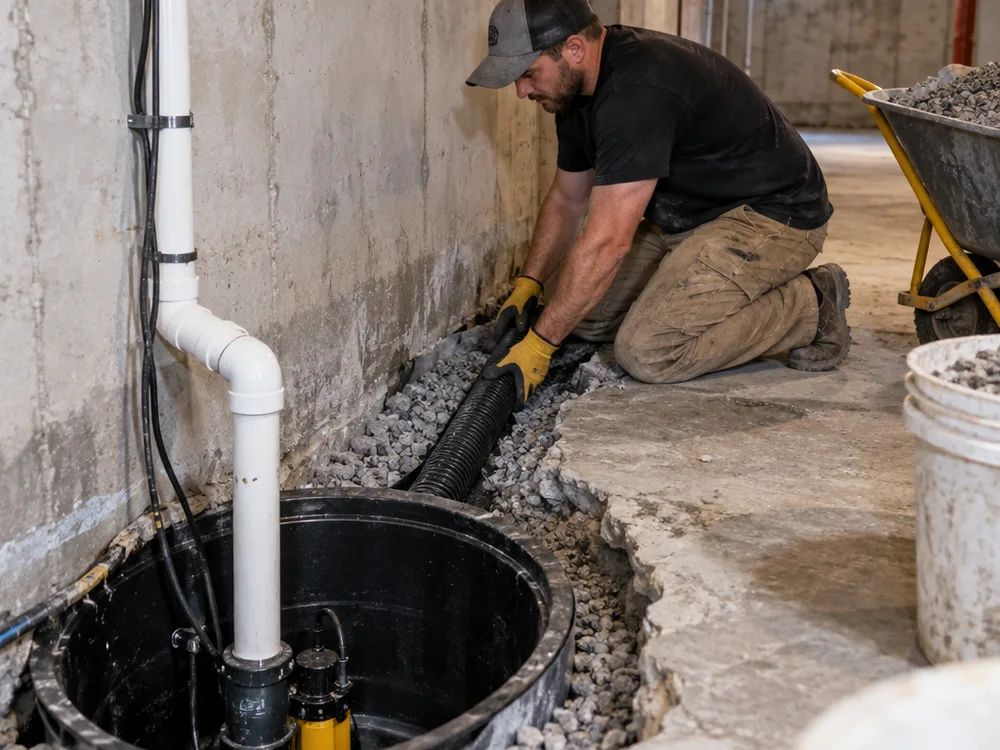
A channel cut along the edge of the floor collects water before it spreads and carries it to a sump.
02
Sump pump and discharge
A correctly sized pump moves the water out, and the discharge line sends it well away from the foundation.
03
Crack and pipe sealing
Leaking cracks and pipe openings in poured walls are injected and sealed from the inside.
04
Vapor barrier on the walls
A wall liner directs seepage down into the drain and keeps the basement drier and cleaner.
Budgeting for a Dry Basement
| Job | Typical cost |
|---|---|
| Basement waterproofing | $3,000 – $10,000 |
| Interior perimeter drain (per foot) | $40 – $120 |
| Sump pump installed | $600 – $2,500 |
| Crack injection (per crack) | $250 – $800 |
These are typical ranges from national and Tennessee cost guides, not our quotes. The size of the basement, how much of the perimeter needs a drain and whether walls are finished all change the price.
Water on the basement floor again? Let's find where it starts.
Call (865) 417-3894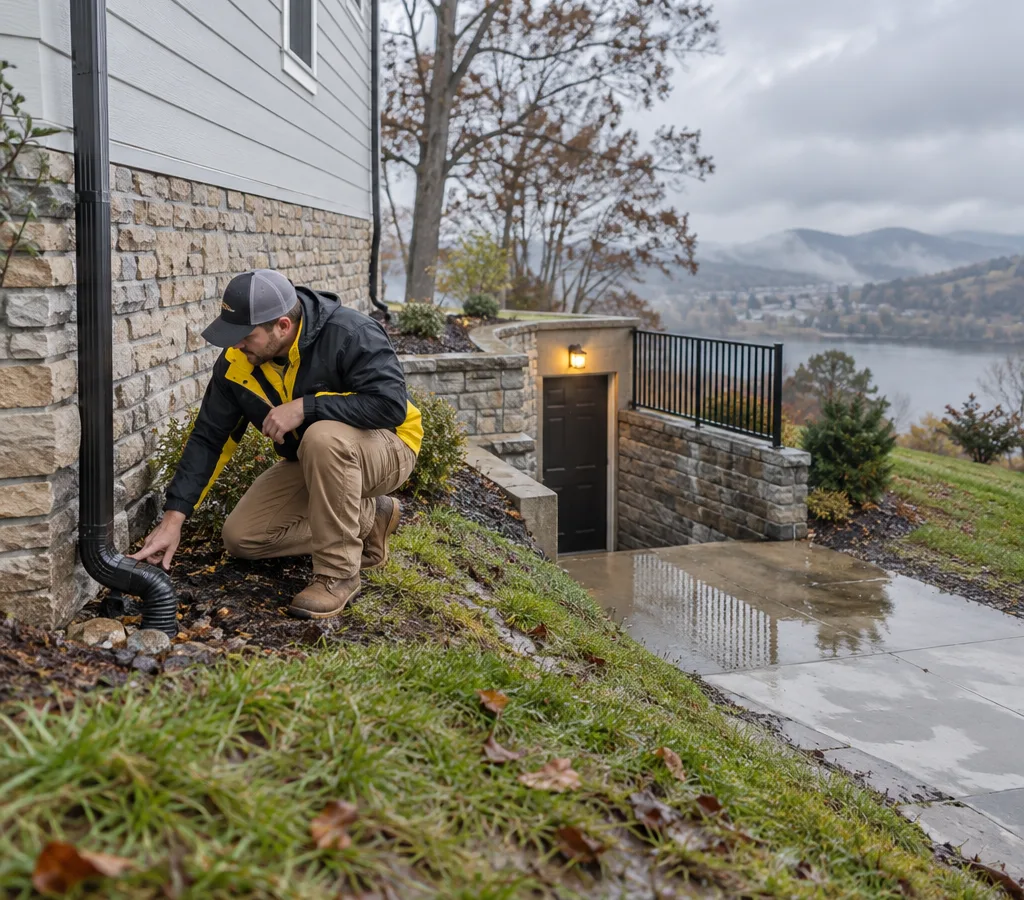
Fixing the Water Outside Too
Some leaks start in the yard. On many Knoxville lots, short downspouts, gutters that overflow and soil that slopes toward the house keep the ground next to the wall soaked. Fixing those is often cheap and makes any interior system work less. The same water is also behind most settling, which is why we look at it alongside foundation stabilization.
If a wall is cracking and bowing as well as leaking, we deal with both at once so the waterproofing isn't installed against a wall that's still moving.
Answers About Leaky Basements
Why does my basement only leak after heavy rain?
Rain saturates the soil, and water pressure builds against the walls and under the floor. It finds the weakest point, usually the joint where the wall meets the floor, a crack or a pipe opening.
Is an interior drain better than sealing the walls?
For water coming in at the floor joint, an interior drain is usually the more reliable fix because it relieves the pressure instead of trying to hold it back. Coatings help with dampness but rarely stop a real leak on their own.
Do I need a sump pump?
If you add an interior drain, the water has to go somewhere, and a sump pump sends it outside and away from the house. If you already have one that runs constantly, it may be undersized or the discharge may be dumping water right back against the wall.
Can you waterproof a finished basement?
Often yes. An interior drain runs along the edge of the floor, so only the bottom of the finished walls may need to come off. We explain exactly what gets opened up before any work starts.
How long does it take?
Sealing a crack takes a few hours. A full interior drain and sump usually takes one to three days, depending on the size of the basement.
Use Your Basement Without Worrying About Rain
Call to set up an inspection anywhere in Knoxville. We'll show you where the water gets in and what it takes to keep it out.